On 14 September 2026 the Federal Circuit and Family Court of Australia (Division 2) handed down Dey v Minister for Immigration and Citizenship (No 2) [2026] FedCFamC2G 1799. A solicitor of more than twenty years' standing — a self-described specialist in his field — had prepared judicial review submissions citing six authorities that were, in the Court's words, hallucinations of a generative AI program. When the question of his personal liability for costs arose, his submissions in answer contained five more. It was the Court that discovered them: "Court resources were utilised to fact check submissions prepared by a legal practitioner. It is unacceptable that this occurred." The practitioner admitted the hallucinations only after the Court sought clarification as to whether the authorities existed. The outcome — for the AI misuse together with other breaches of his duty to the Court found in the same proceedings — was personal costs orders totalling $9,600, and the practitioner named in the published reasons — the Court declining to "provide [him] with a shield by anonymising his identity."
Dey joins what Brasch J called, in Tesar & Szep (No 3) [2026] FedCFamC1F 21 at [23] (quoted in Dey at [78]), "an unfortunately developing body of caselaw concerning the use of AI in the preparation of documents filed with the Court" — Valu v Minister for Immigration and Multicultural Affairs (No 2) [2025] FedCFamC2G 95 and Dayal [2024] FedCFamC2F 1166 among them, each ending in a referral to the regulator, a personal costs order, or both. The pattern matters more than any single case: in each instance the practitioner asked a general-purpose chatbot for the answer — and filed it without checking. The failure was never that a lawyer used software. Lawyers have adopted new tools in every generation of practice: photocopiers, searchable databases, eDiscovery platforms. The failure was treating the output as a finished product rather than a first draft to be verified.
1. A tool for efficiency — nothing more, and that is the point
Legal AI tools, used properly, do one thing of real value: they give you time back. The mechanical first pass — reading every page, assembling the chronology, aligning the pleadings, drafting the schedule — is where days disappear. A well-built tool compresses that work into minutes.
What the tool does not do — and should never pretend to do — is practise law. It does not decide what matters. It does not weigh a concession against a risk, read a witness, or judge what your client's case actually needs. Those are lawyer skills, and no software replaces them. The honest promise of legal AI is narrower and better: less time on the mechanical work, more time for the judgement only you can bring.
2. The duty does not move
A practitioner's paramount duty is to the Court and the administration of justice. That duty attaches to everything filed over your name — however it was prepared, and whoever (or whatever) prepared the first draft. The Court in Dey said so in terms: there is "no blanket prohibition upon the use of generative AI" — it "can be a useful research tool but it is not a proper substitute for legal research and it must be used having a legal practitioner's duty to the Court firmly in mind" (citing Pasuengos v Minister for Immigration and Citizenship (No 2) [2026] FedCFamC2G 96). The Federal Circuit and Family Court's Practice Direction of 29 May 2026 on the use of AI — noted in Dey as now applying to all proceedings in the Court — proceeds on exactly that footing: the tools may be used; the responsibility for what is put before the Court remains, entirely and personally, the practitioner's.
Read the citation cases through that lens and they stop being stories about technology. They are stories about verification — the same professional obligation that has always applied to the work of a junior, a clerk or a research memo. If you would not file a junior's first draft unread, the same discipline applies to a machine's.
3. So build verification into the tool itself
This is the principle Probative was built on. Probative was built by Australian lawyers, for lawyers — practitioners who wanted the hours back but knew the duty doesn't move. So verification isn't an afterthought in our tools; it is the architecture:
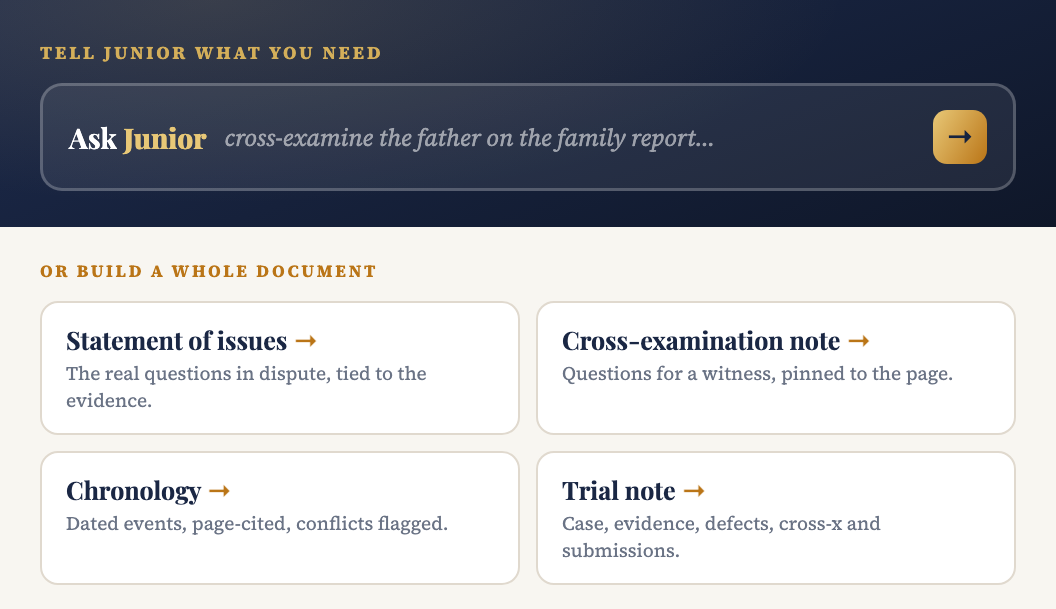
How verification works in practice
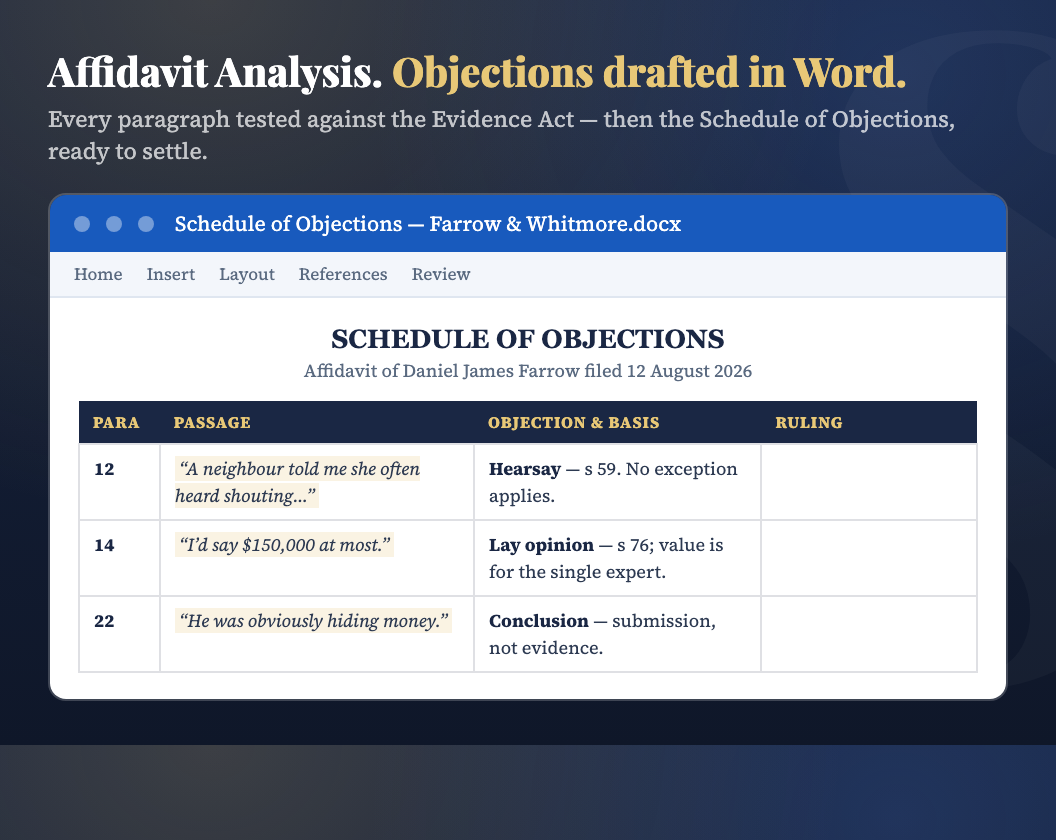
4. Check everything. Then enjoy the hours.
None of this dilutes the value of the tools; it is what makes the value real. A brief of 3,000 pages read in an hour, a schedule aligned in minutes, a first-pass cross-examination drafted before lunch — those gains are genuine, and practitioners across Australia are already banking them. But they are gains in time, not transfers of responsibility. The practitioner who verifies everything gets both: the hours back, and work that stands up when the other side — or the Bench — tests it.
That is the whole philosophy, and it fits in a sentence: use the tool for the work, keep the judgement for yourself, and check everything before it goes near the Court.
This article is general commentary on practice and technology. It is not legal advice, and Probative expresses no legal conclusion. Case references are provided so you can read the decisions yourself — which is, after all, the point.